

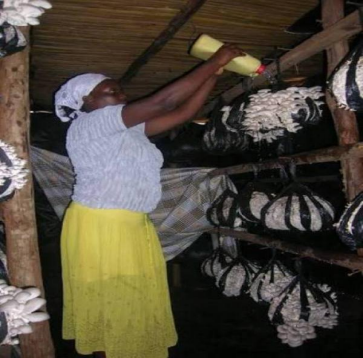
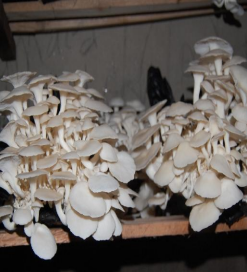
Christina Anyango Ouma is a Social Worker and Project Officer at Divine Youth and Development Foundation in Mayuge, Uganda, and a Diploma holder in Organic Waste Management. Coming from a community where youth and women face limited income opportunities, she leads the Foundation's work converting agricultural waste into organic oyster mushrooms and compost — creating affordable nutrition and income while promoting a circular, zero-waste farming system in Kityerera Sub County, Mayuge District.
With our $500 Giving Joy microgrant, (generously donated by ARC Collective, a woman-founded and led media company), the Foundation is training 106 youth, women and smallholder farmers over six months in mushroom cultivation, composting, agricultural waste management and value addition. The program moves from hands-on workshops on substrate preparation, spawning and harvesting, to mentorship and record-keeping, to a final phase on drying, quality assurance, value addition and basic business skills.
Mid-term Update (October 2026)
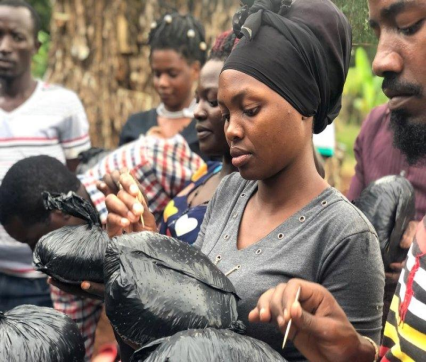
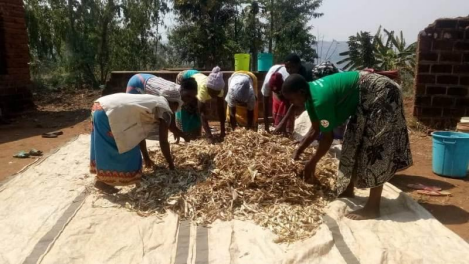
Halfway through the grant, the core training is complete. Small-group workshops taught participants to prepare growing substrate from local crop residues, keep production hygienic, manage growing conditions, harvest, and turn spent substrate into compost. The grant supplied training manuals, protective gear and demonstration materials, and Christina's team followed up with technical mentorship to help growers solve common problems and improve quality.
Drying and value-addition training begins in November 2026, teaching participants to preserve mushrooms, cut post-harvest losses and sell longer-lasting products.
Christina's biggest lesson so far: growing mushrooms is not enough on its own. "Producers need access to buyers, appropriate preservation methods and reliable information about market demand and prices," she writes. The team is now putting more time into practical demonstrations, follow-up visits, record-keeping and building buyer connections before production scales up.
The Impact
The grant reaches 106 people directly: 65 women seeking additional household income, 30 youth seeking work and entrepreneurship opportunities, and 11 smallholder farmers improving their agricultural practices. Participants are gaining practical skills in mushroom cultivation and composting, new ways to earn income, and a better understanding of nutrition and zero-waste farming. As they share skills with their families and neighbours, the benefits extend to an estimated 848 more people across roughly 212 households.
For Christina, the project has built her confidence in community mobilization, training and using local resources to solve local problems. For the Foundation, it has created a replicable model that can grow to reach more youth, women and farmers.
Looking Ahead
Over the coming months, the Foundation will help trained participants start or expand small-scale mushroom production, continue mentorship visits, and introduce drying, safe storage and packaging. It will connect growers with local households, food vendors, restaurants and retailers, and encourage participants to form youth- and women-led groups that pool resources and reinvest their earnings. The team will track production, sales, income, compost made and agricultural waste reused to measure results.
Christina's long-term vision is a community where agricultural waste is treated as a valuable resource rather than a problem, and where sustainable farming creates lasting livelihoods.