
Building a Network of Women Lawyers Fighting for Justice in Pakistan
Imagine being the only female lawyer in your entire district. You show up to court every day in a building that wasn't built for you, among colleagues who didn't want you there, fighting for women whose cases no one else will take.
That is the reality for many women lawyers in Khyber Pakhtunkhwa, Pakistan. And it's exactly the reality that Zara Tajwar has dedicated her career to changing. As a first-generation lawyer with no political connections and no inherited wealth, Zara's path was slower and harder than most. But it gave her something her peers didn't have: an unshakeable understanding of what women in Pakistan are up against. Today she leads LAWomen — a legal social enterprise run by 25 women lawyers providing affordable, tech-enabled legal services to women who can't afford them, in areas where they need help most: family law, workplace harassment, inheritance rights, and gender-based violence.
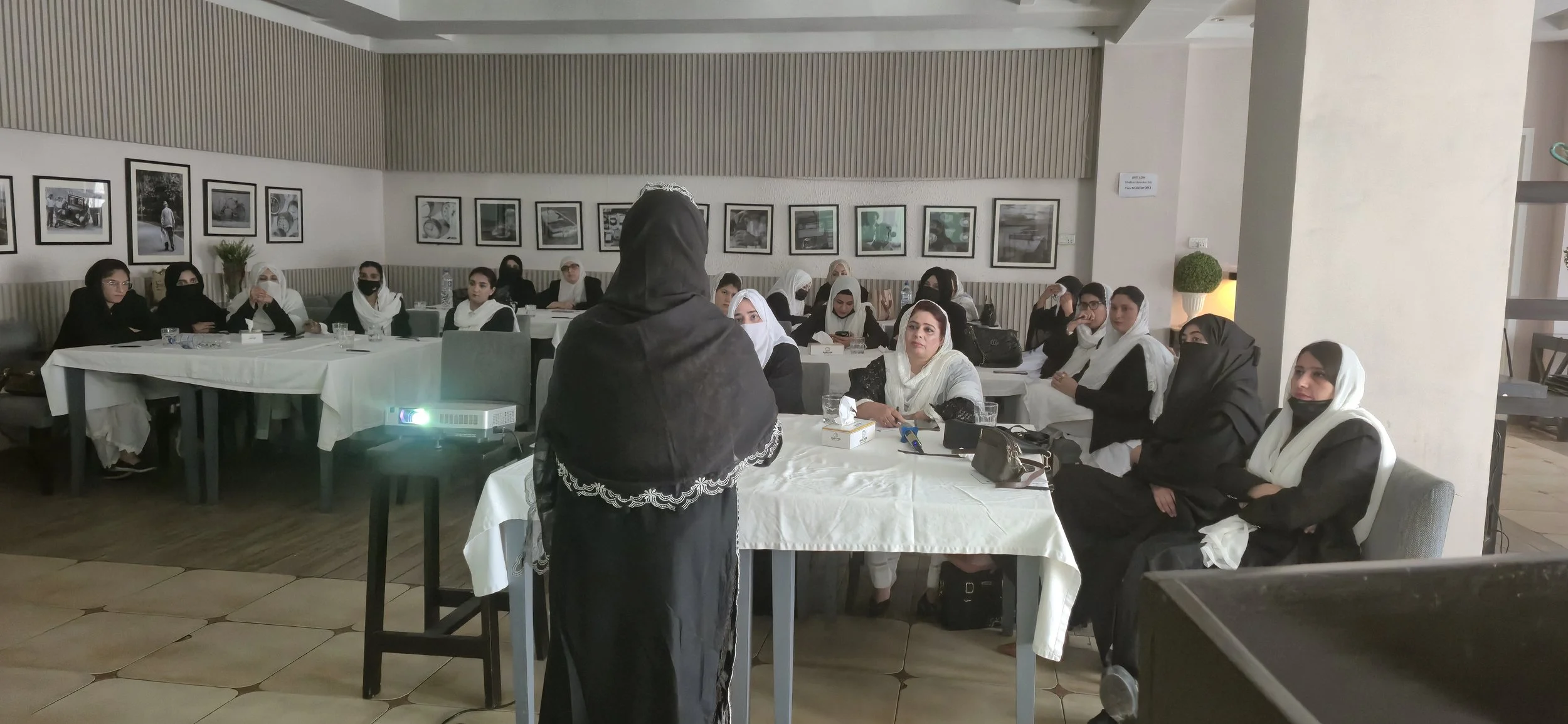
LAWomen had a training planned for 20 female lawyers in Peshawar. The content was ready. The need was clear. The only thing missing was funding. A $500 Giving Joy microgrant made it happen.
Two expert trainers delivered two powerful modules. The first sharpened participants' practical legal skills — walking through the latest court judgments on family law, harassment, and inheritance rights, and using role-playing exercises to build real courtroom advocacy. The second focused on something law school rarely teaches: trauma-informed communication. How to sit with a survivor. How to listen without judgment. How to help a woman tell her story without fear.
Twenty lawyers left better equipped — legally and humanly.
One participant at the workshop shared what had happened to her just weeks before. As the only female lawyer in her district, she had been given a dedicated room in the court premises — a small accommodation so she could work safely. Overnight, a group of male lawyers stripped her of it, converting it into an e-library and removing all her belongings.
She called LAWomen. Within days, the network mobilized — publicly, loudly, and effectively. The Bar Council was petitioned. Pressure built. The room was restored. An apology was issued.
That is what trained, connected women lawyers can do for each other — and for every woman whose case they carry into court.
Each of the 20 lawyers trained will go on to represent dozens of women annually. Zara is already planning a five-day program on alternative dispute resolution and paralegal skills.