
In Kityerera Sub-County, Uganda, after the harvest comes the burning. Stalks, husks and crop residues pile up at the edge of the fields, and most of it goes up in smoke. Meanwhile, young people search for work, and women look for any way to add a little more to the household income.
Christina Anyango Ouma looked at that pile of waste and saw a crop waiting to happen.
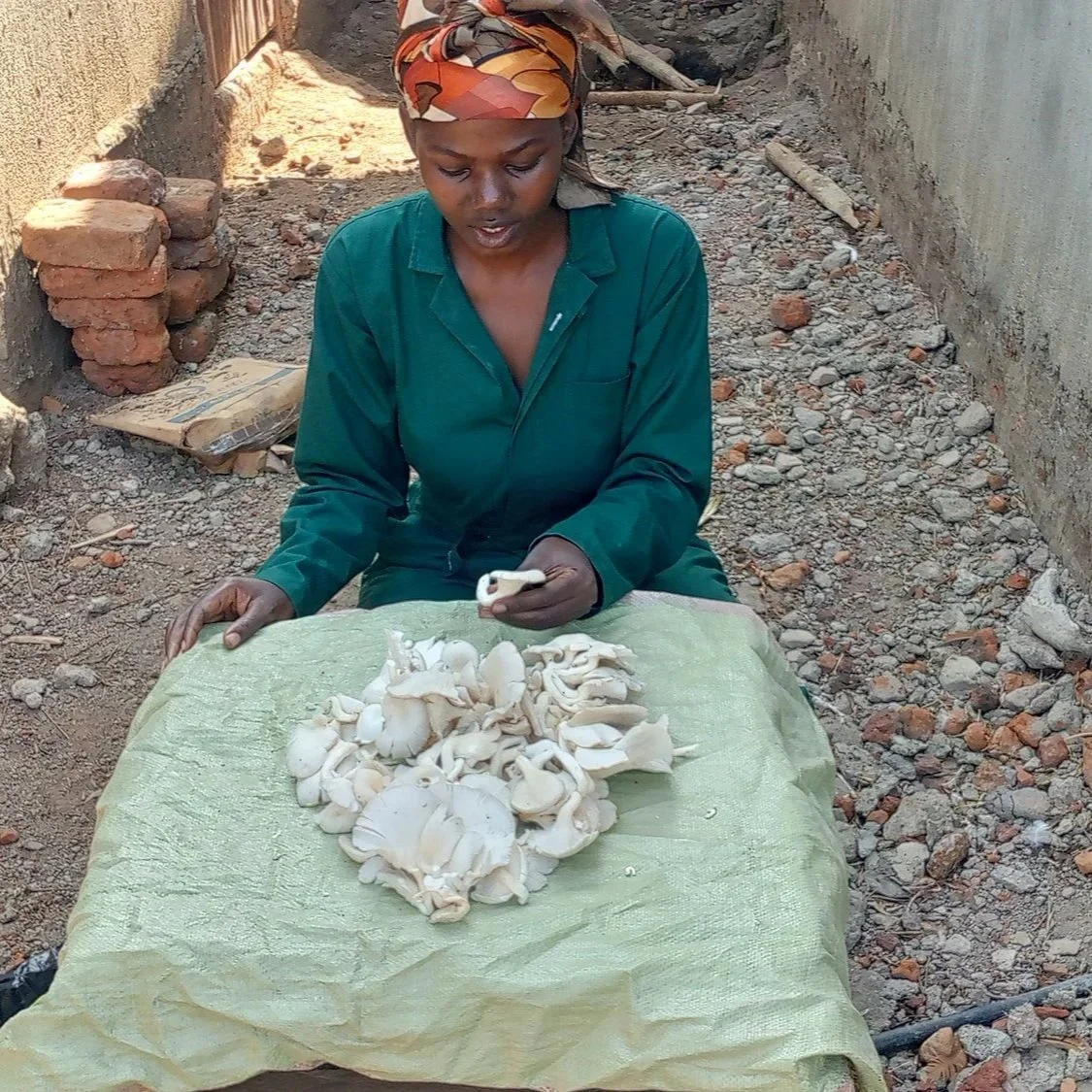
Christina (in photo above) is a social worker and project officer at Divine Youth and Development Foundation, with a diploma in organic waste management. This summer, a $500 Giving Joy microgrant, donated by ARC Collective, gave her the chance to put an idea to work: teach her neighbours to grow organic oyster mushrooms on agricultural waste, then turn what's left into compost for their fields.
Three months in, here's what's happened
Christina's team brought together 65 women, 30 youth and 11 smallholder farmers for hands-on workshops. Side by side, they learned to turn crop residues into growing substrate, keep production hygienic, harvest at the right moment, and compost what's left to enrich their soil.
Each participant received training materials and protective gear, and mentorship visits are helping growers troubleshoot and improve their harvests.
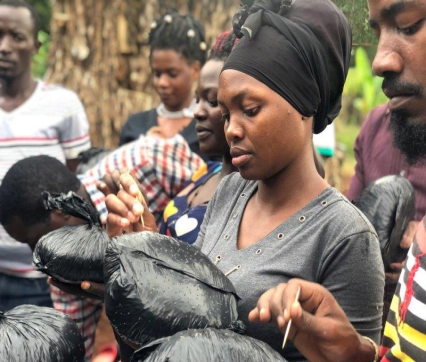
Participants Preparing Mushroom-Growing Substrates
"Growing mushrooms alone is not enough"
Christina's biggest lesson is a practical one: a good harvest only changes lives if it can be sold. "Producers need access to buyers, appropriate preservation methods and reliable information about market demand and prices," she writes.
What's coming
In November, participants begin training in drying and preserving mushrooms, so a fresh harvest becomes a product that lasts. Next, Christina will connect growers with local households, food vendors and restaurants, and help women and youth form groups that reinvest their earnings.
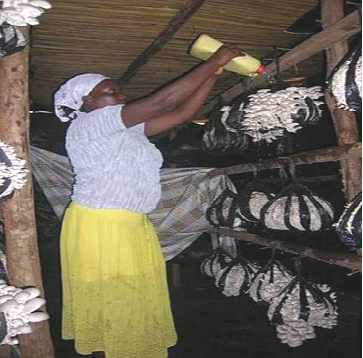
Mushroom harvesting
Why it matters
For women, mushrooms mean income of their own. For youth, a first small business. For the community, nutritious food and fields fed with compost instead of smoke. Christina's vision is a community where agricultural waste is "a valuable resource rather than a problem". 106 people are already proving it can be done.
Thank you to ARC Collective for funding this grant, and to every Giving Joy supporter who makes stories like Christina's possible.