
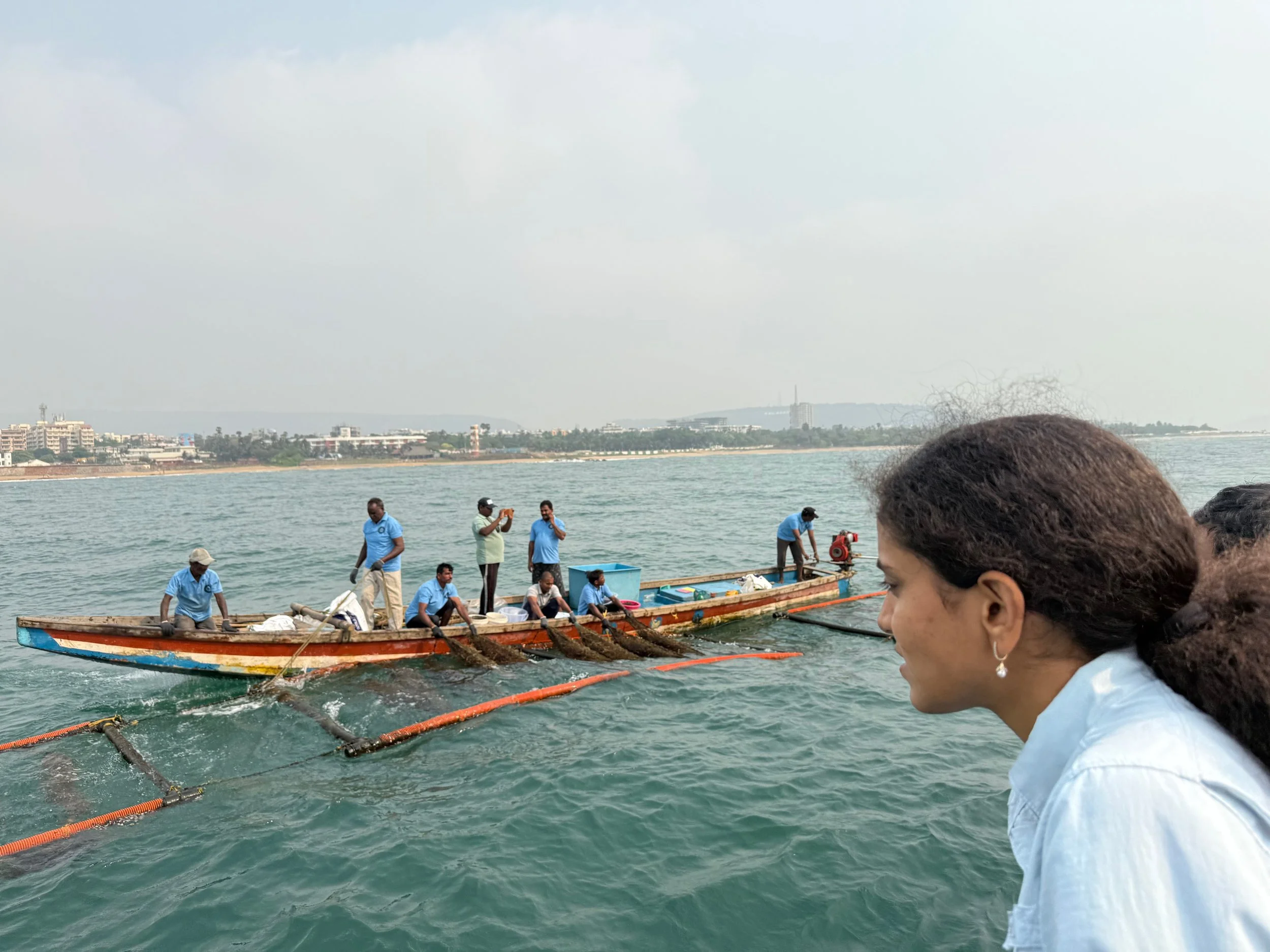
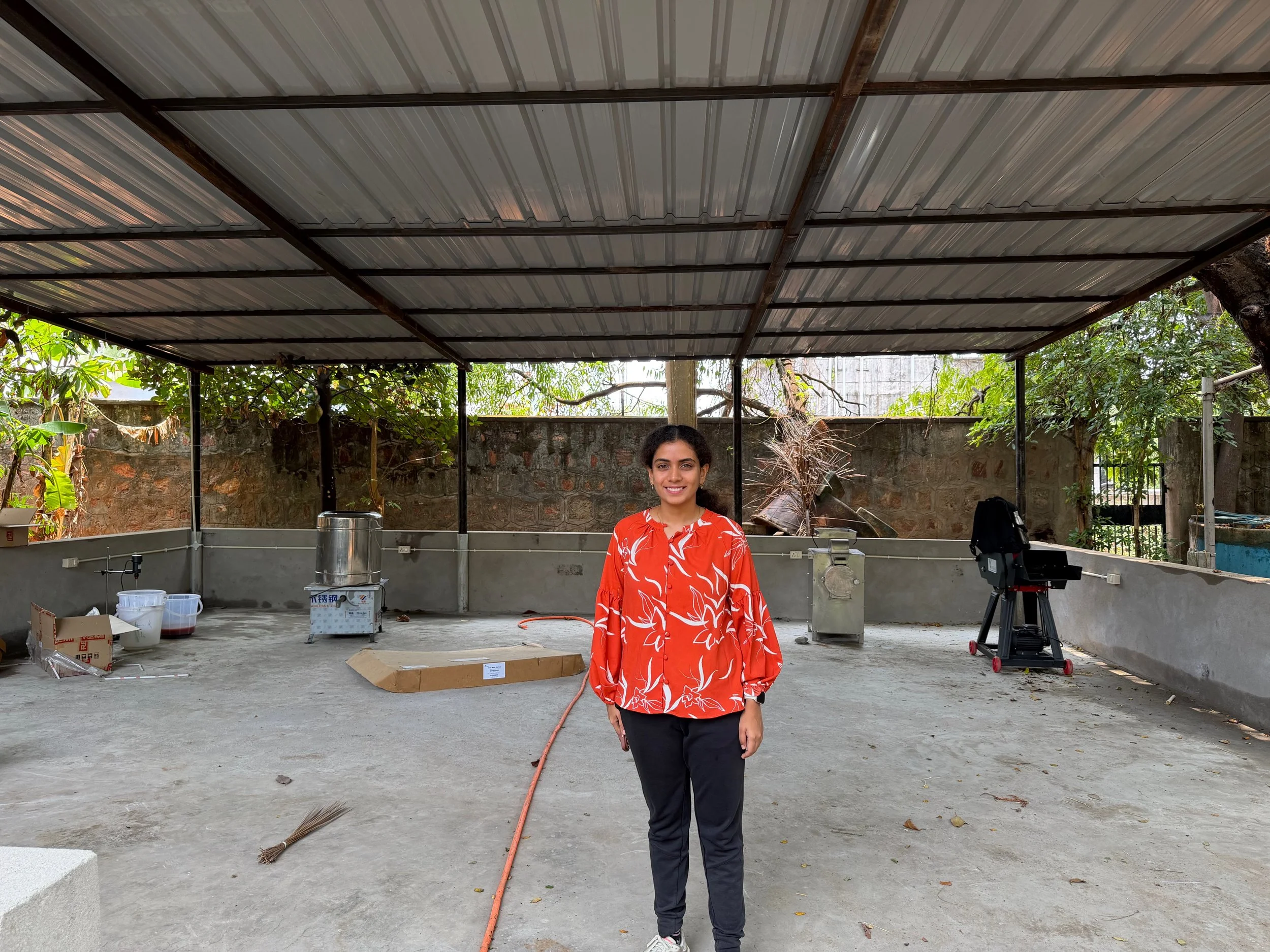
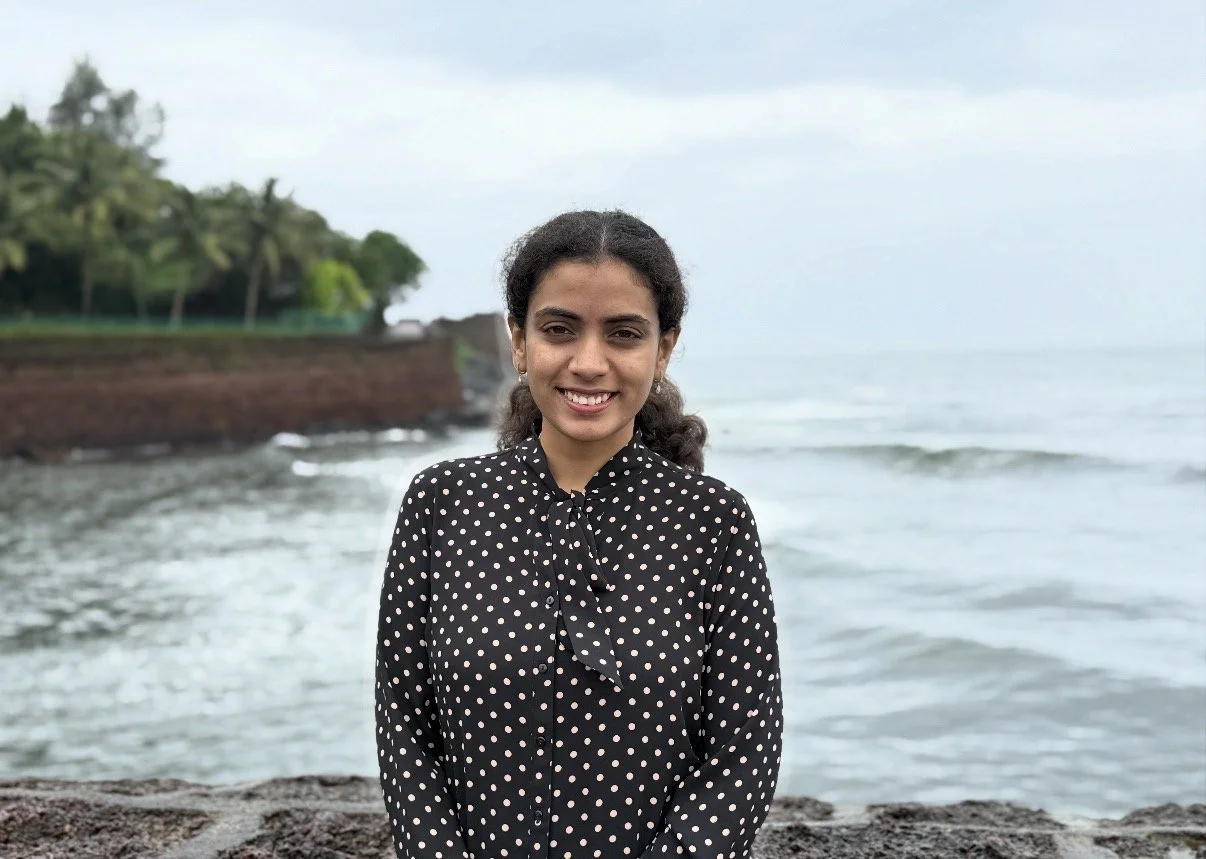
Pranitha Pullamaraju is a Public Policy graduate and first-generation founder based in Visakhapatnam, India, and the founder of IndiraSamudra. After a year working in electronics, she was drawn to entrepreneurship after seeing how unstable incomes and poverty, affecting 97% of fisher households in her community, were hitting coastal families, and set out to build sustainable livelihoods, particularly for women. IndiraSamudra works with small-scale fishing communities facing declining catches, cultivating seaweed as an alternative income source: the venture has already established 30 seaweed rafts, engaged more than 15 fisherfolk, completed three cultivation cycles, and is now building a micro-processing unit to add value to the harvest.
With our $500 Giving Joy microgrant, (generously donated by ARC Collective, a woman-founded and led media company), IndiraSamudra is piloting a training program that introduces 5 to 15 women from local fishing communities to seaweed processing at its micro-processing unit — covering hygiene, handling, drying, and basic processing techniques. The grant will give participants hands-on experience they can turn into ongoing income as IndiraSamudra's processing operations grow.
The Expected Impact
This grant is expected to directly benefit 5 to 15 women from fishing communities in Visakhapatnam through hands-on training and processing experience. Their households stand to benefit as these women take on new income opportunities, and more than 20 community members are expected to be touched directly or indirectly as IndiraSamudra builds out its women-inclusive processing model.
Progress Update
So far, Pranitha has focused on preparation. Rather than run a general training, she is choosing one value-added seaweed product for the women to make. This will be IndiraSamudra’s first product made by women, rather than selling only raw or dried seaweed. She is testing several options and talking with stakeholders before deciding.
Lessons Learned
Pranitha realized early on that a training without a concrete product wouldn’t create lasting value. Involving women directly in making a real product gives them a skill they can keep using.
Looking Ahead
After small trials to finalize the product, IndiraSamudra will hold a hands-on workshop in December where 5 to 10 women from local fishing communities will each make and label the product, followed by check-ins with participants in January. Trained participants will then join regular processing activities as operational batches come through, with IndiraSamudra documenting what it learns to refine the model for future community training programs.