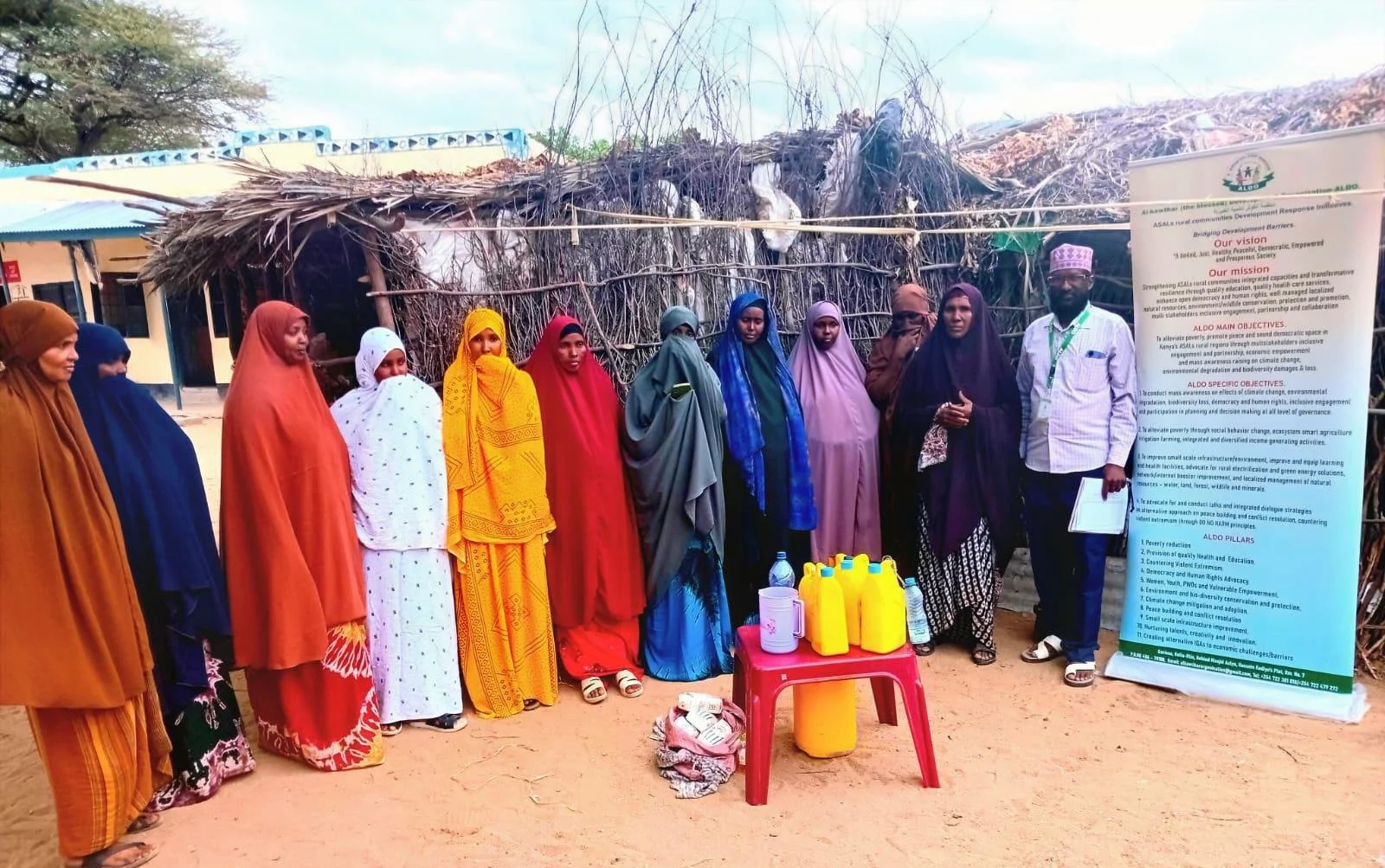
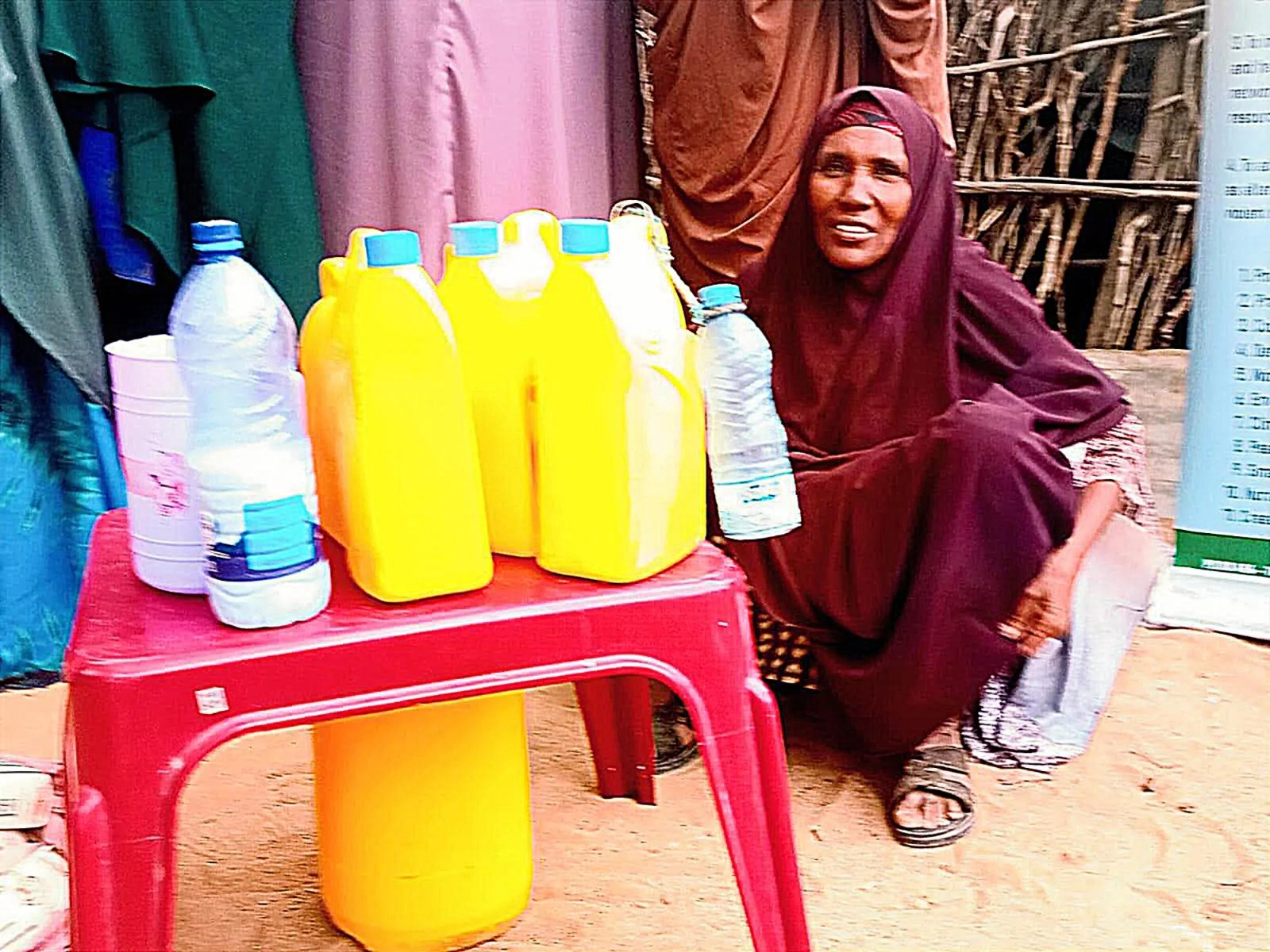
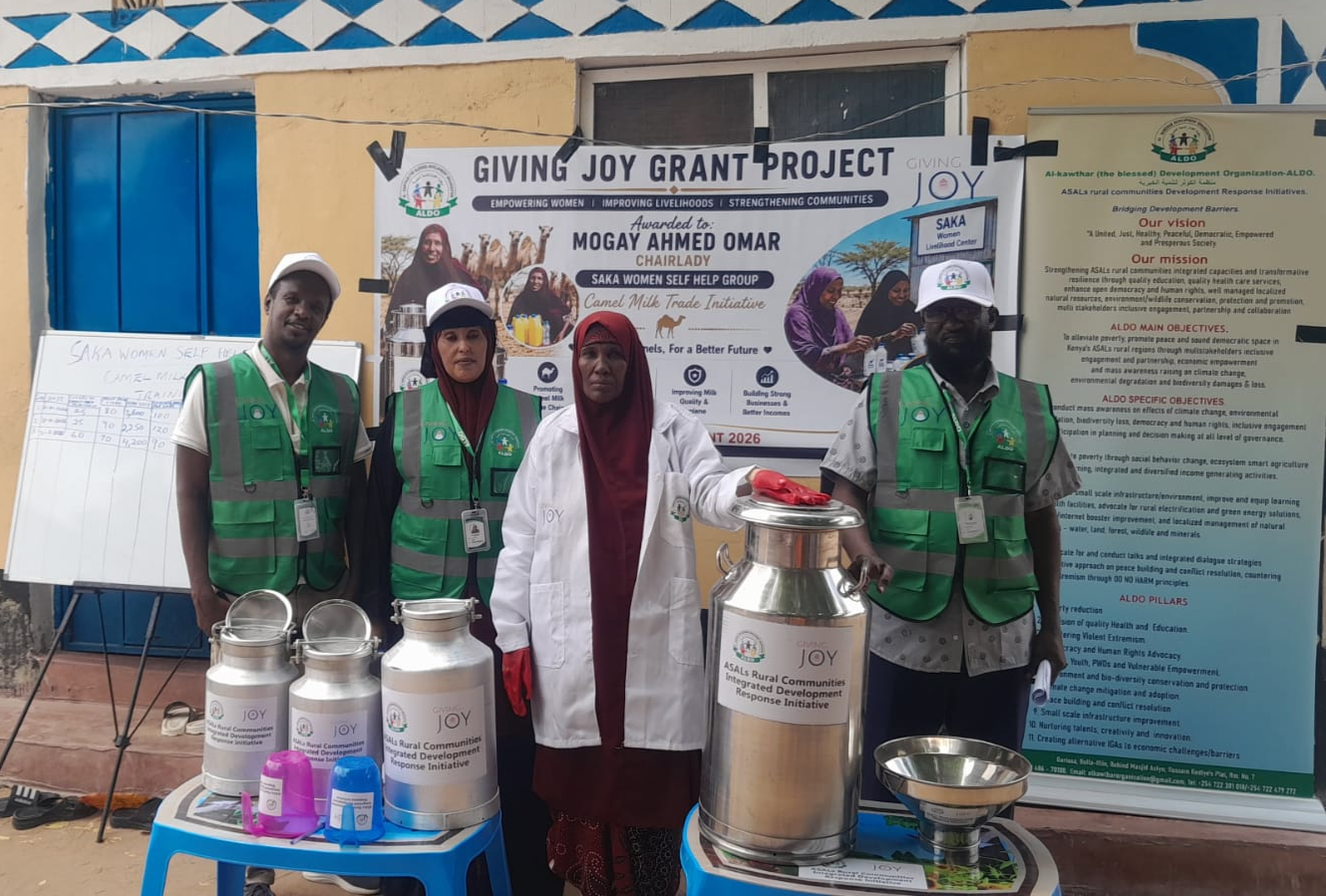
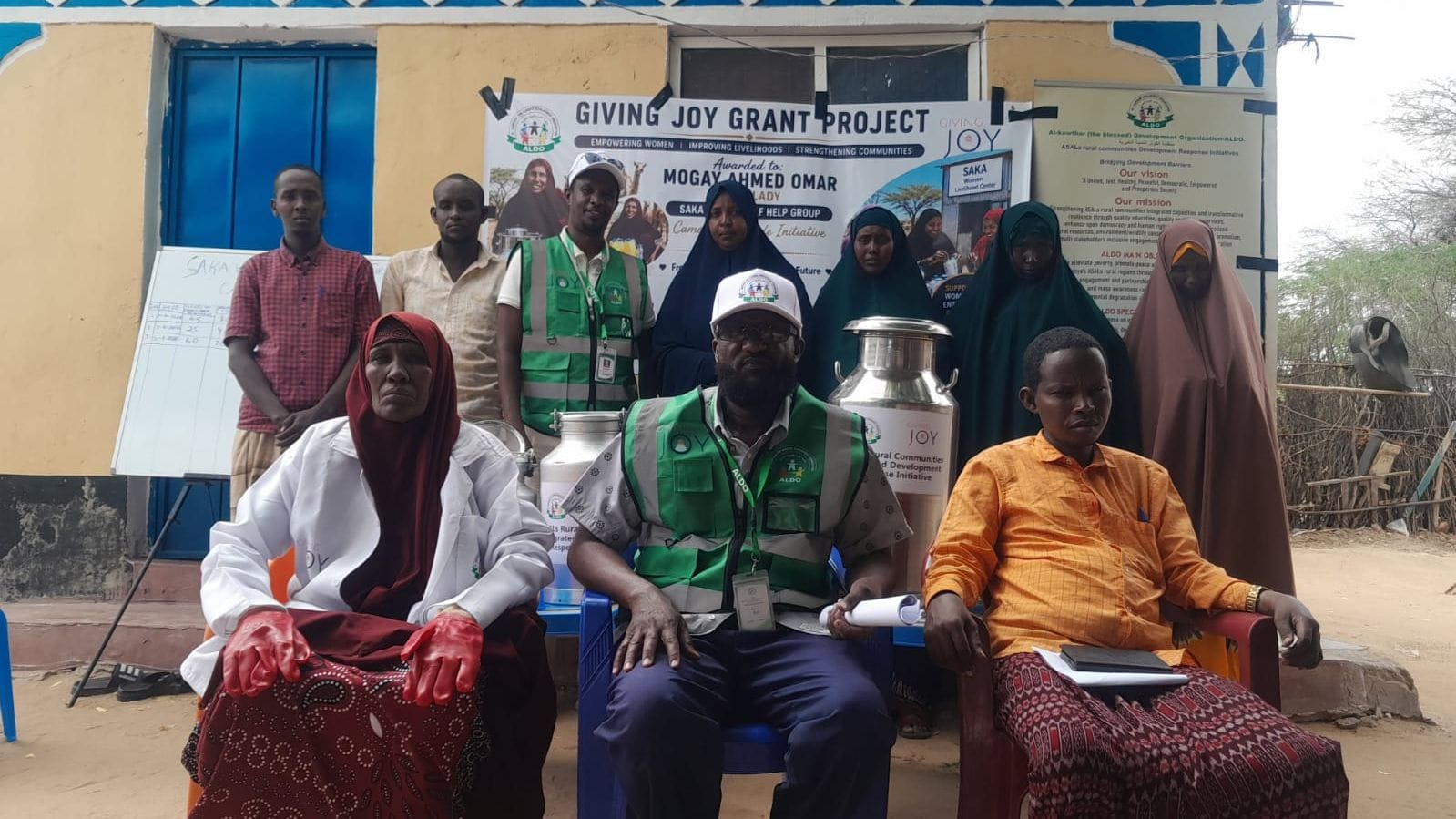
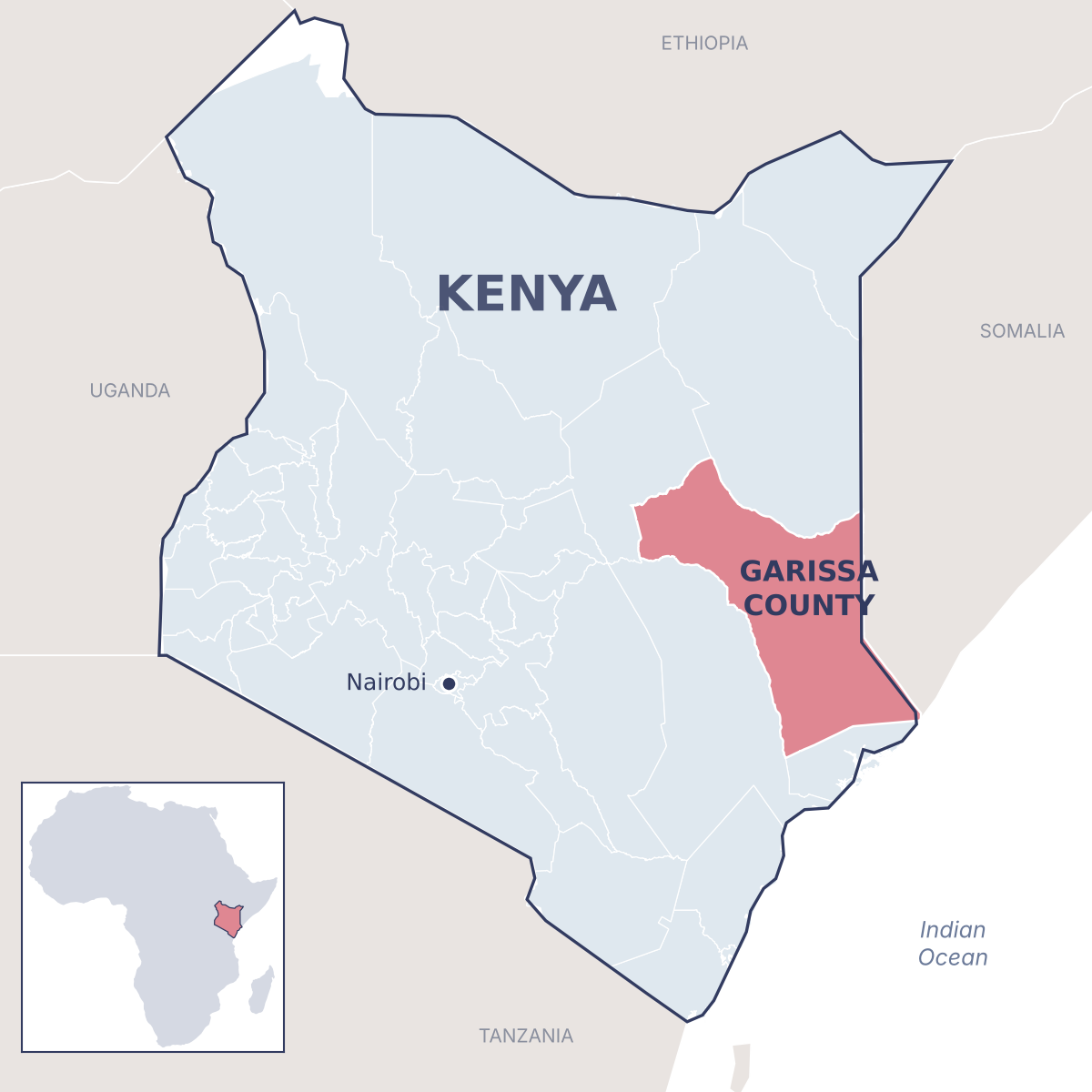
Mogay Ahmed Omar is a single mother of five orphaned children from a marginalized, climate-affected community in SAKA ward, Balambala Constituency, Garissa County, northern Kenya. Facing rising family needs, she formed a ten-member self-help group to buy and sell camel milk at the Saka trading center, alongside a merry-go-round savings and loans scheme — turning a shared hardship into shared income and a path to financial independence for women in her community.
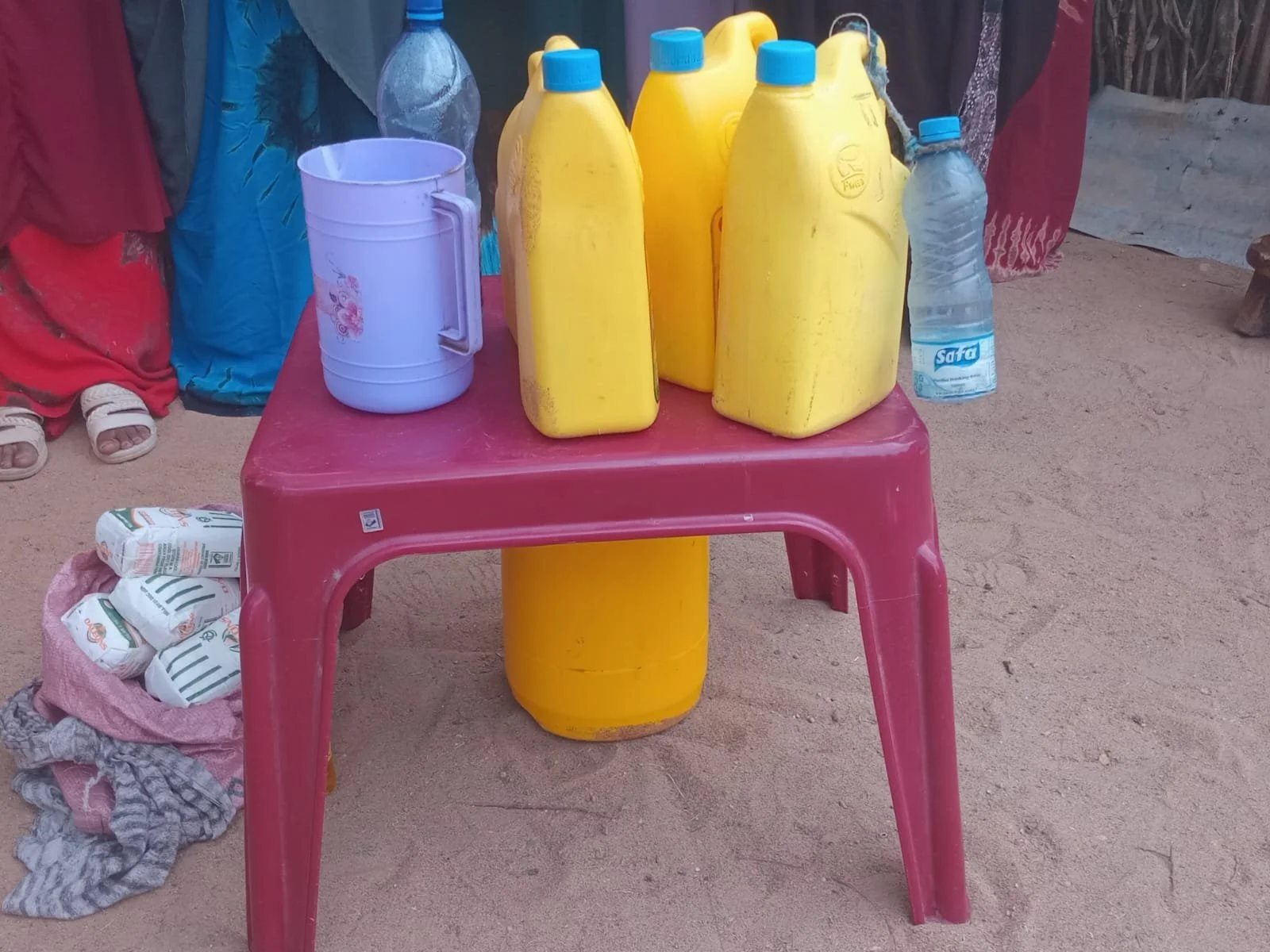
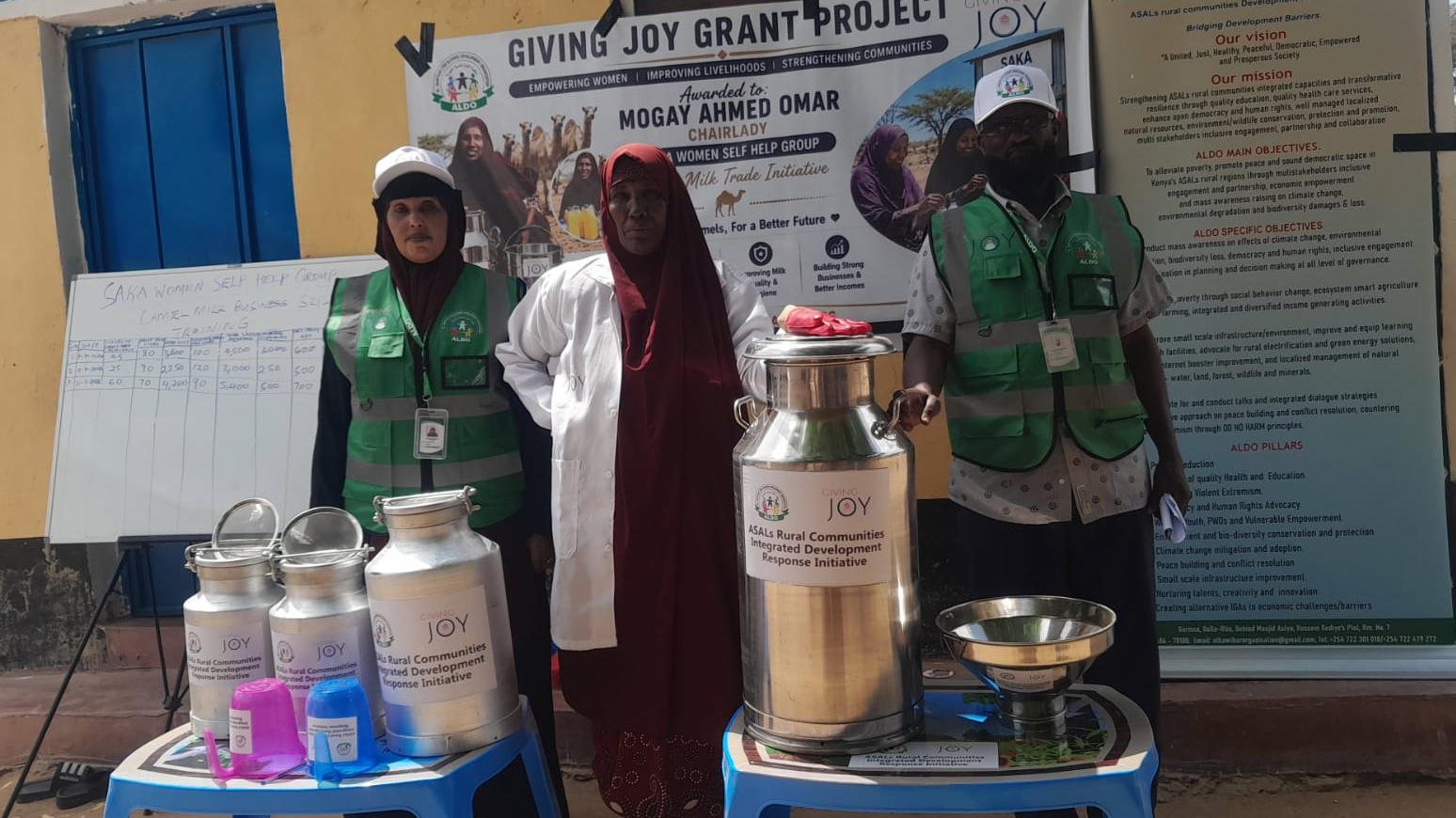
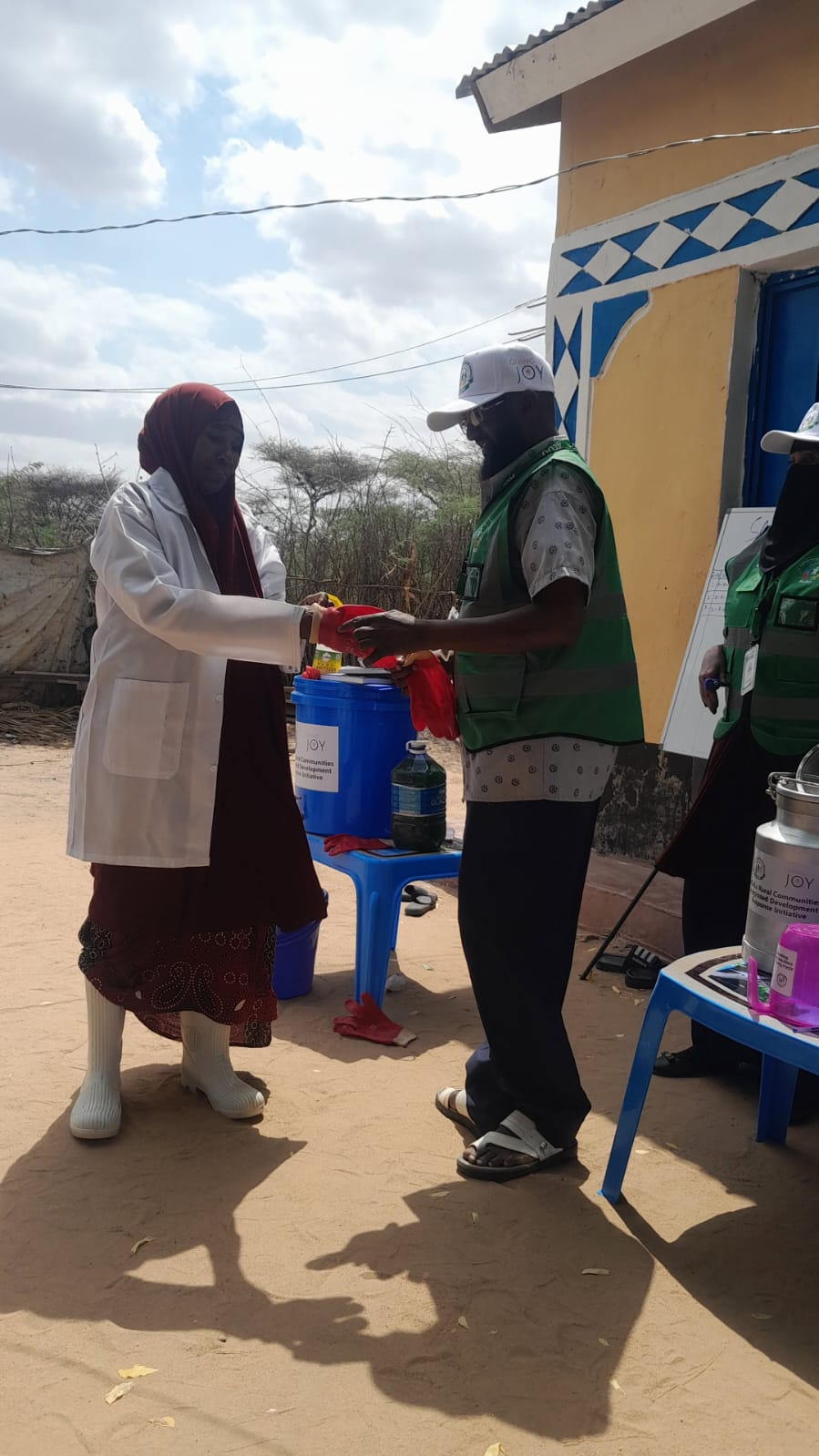
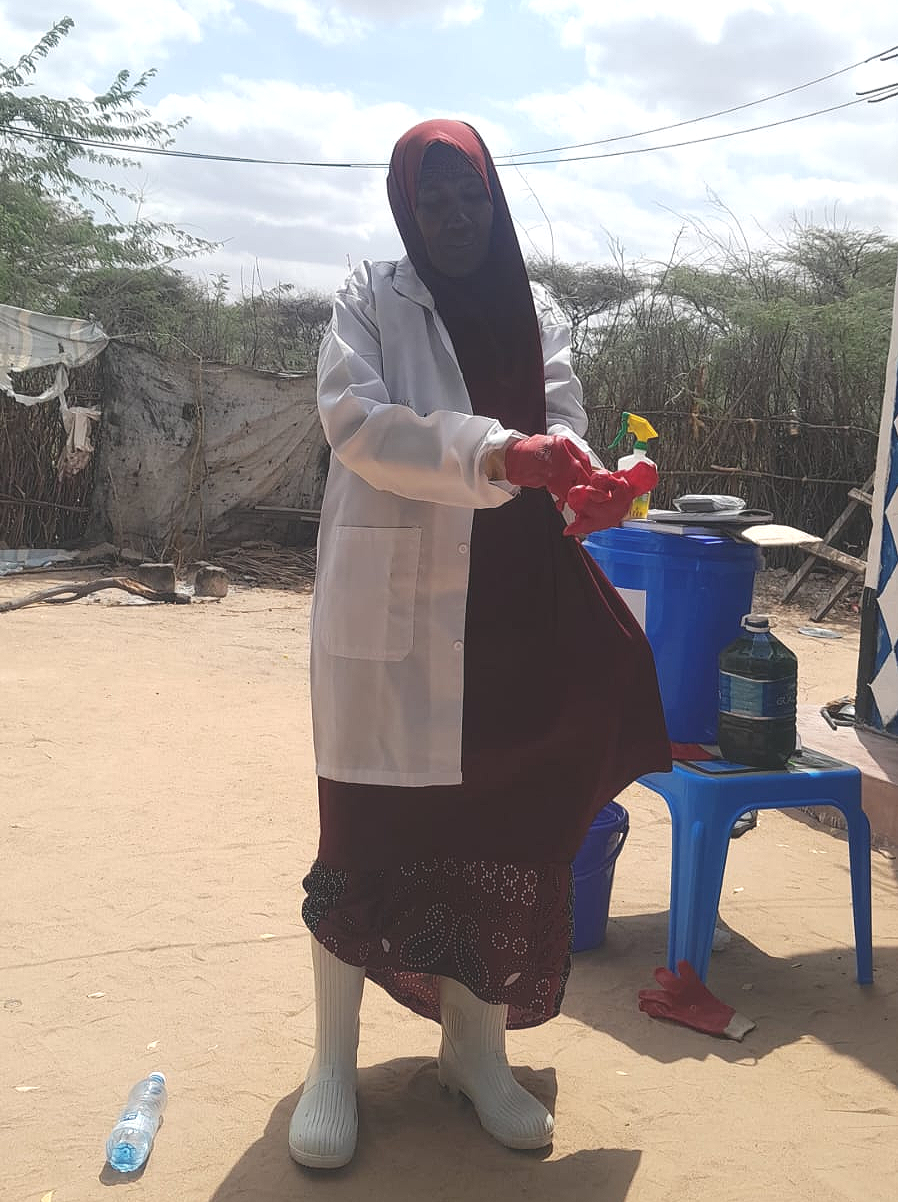
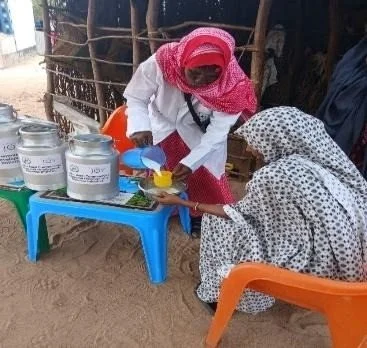
With our $500 Giving Joy microgrant, (generously donated by ARC Collective, a woman-founded and led media company), delivered in partnership with local implementing partner ALDO, the group is upgrading how it handles and sells its milk: aluminum milk storage containers, hygiene and sanitation supplies, basic quality-testing tools like a lactometer and thermometer, and record-keeping materials, along with basic training in bookkeeping and business skills for members. The goal is to reduce spoilage, improve milk quality, and build the systems the group needs to earn customer trust, grow sales, and strengthen its savings and loans activities for the long run.
The Expected Impact
This grant is expected to directly benefit the 10 women members of the self-help group, who will in turn support an estimated 50 to 70 family members through more reliable household income. An additional 150-plus community members — including local milk traders, customers, and neighbors — are expected to benefit from improved access to quality camel milk and stronger local trade, bringing the project's total projected reach to roughly 220 people.
Progress Update
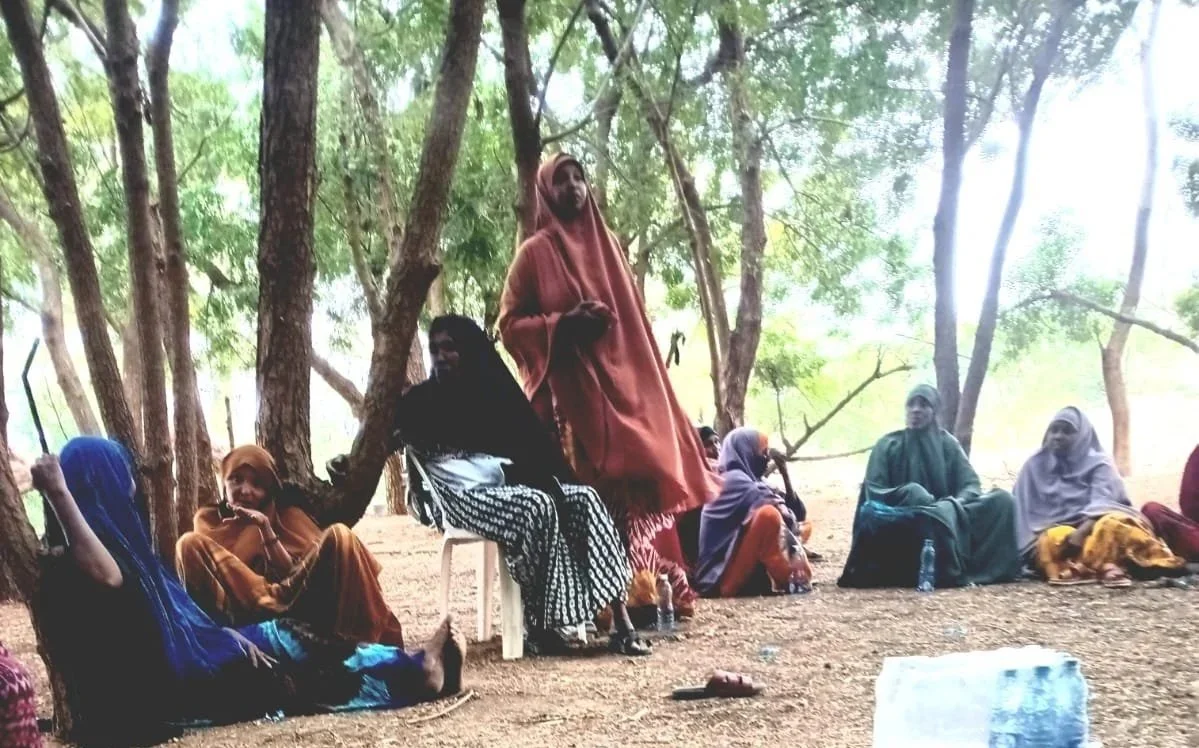
ALDO started by visiting Mogay’s workplace to find her most urgent needs, then held a kickoff meeting with group members and local officials. It trained 13 women in business management, financial management and record keeping, and gave the group equipment, tools, protective clothing and stationery for her camel milk business. At a follow-up visit, the group’s business was still running and they were keeping records of daily sales, expenses and profit. About 210 community members have benefited indirectly, and other women’s groups now see Mogay as a role model.
Lessons Learned
ALDO found that training works best when paired with equipment people can use right away in their businesses. It also learned that working conditions and refrigeration matter as much as tools when the product is camel milk, which spoils quickly. Next time, ALDO plans to assess the full cost of improving the business at the start, plan for cooling early, and track sales and profit from day one so results are easier to measure.
Looking Ahead
With ALDO's support, the group will complete training on milk hygiene, quality control, and business management, and resume expanded milk collection and sales with stronger market linkages. Next, ALDO hopes to continue mentoring the group on record keeping and pricing, find funding for better shelter and milk refrigeration, connect them with reliable suppliers and buyers, and extend support to more women’s and youth groups in SAKA Ward, depending on available resources.