
Zara Tajwar & LAWomen
Zara Tajwar grew up in Peshawar watching women around her be denied rights they were never told they had. In her conservative Pashtoon community, women's voices were routinely overlooked — in courts, in family disputes, in the quiet injustices of inheritance and marriage and workplace harassment that rarely made it anywhere near a lawyer's desk. Her own mother was a child bride. That personal history didn't just shape Zara's worldview — it became the foundation of her life's work.
Today, Zara is a lawyer, a social entrepreneur, and the founder of LaWomen — a legal social enterprise built on a simple but powerful premise: women deserve access to justice, and they deserve to get it from lawyers who understand their lives.
Getting there wasn't straightforward. Coming from an underserved region with fewer professional opportunities than her peers, Zara's path through law was harder and slower than most. But those challenges forged something: resilience, purpose, and an intimate understanding of what it means to fight for a seat at a table that wasn't built for you. Today she leads a team of 25 women lawyers who are doing exactly that — breaking barriers in one of Pakistan's most male-dominated professions while making justice accessible to the women who need it most.
LaWomen operates on a cross-subsidized model: clients who can afford legal services pay for them, and those fees help fund free or low-cost support for marginalized women who cannot. The result is a "for women, by women" legal practice that covers family law, workplace harassment, inheritance and property rights, and gender-based violence — areas where Pakistani women are most vulnerable and most often left without representation.
The impact is deliberately dual. For women clients, LaWomen provides a safe, non-judgmental space where they feel heard and supported, often for the first time. For the young female lawyers on the team, LaWomen provides professional training, mentorship, and a community in a legal profession where women remain deeply underrepresented — particularly outside of Pakistan's major urban centers.
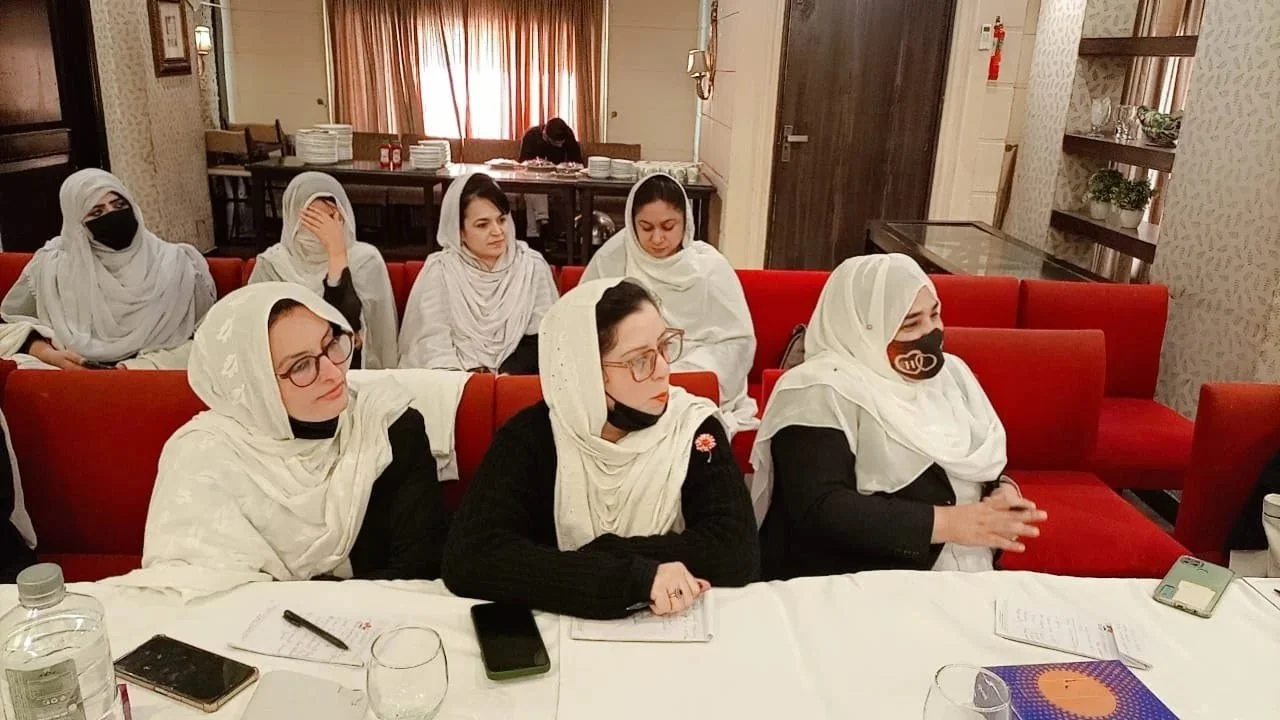
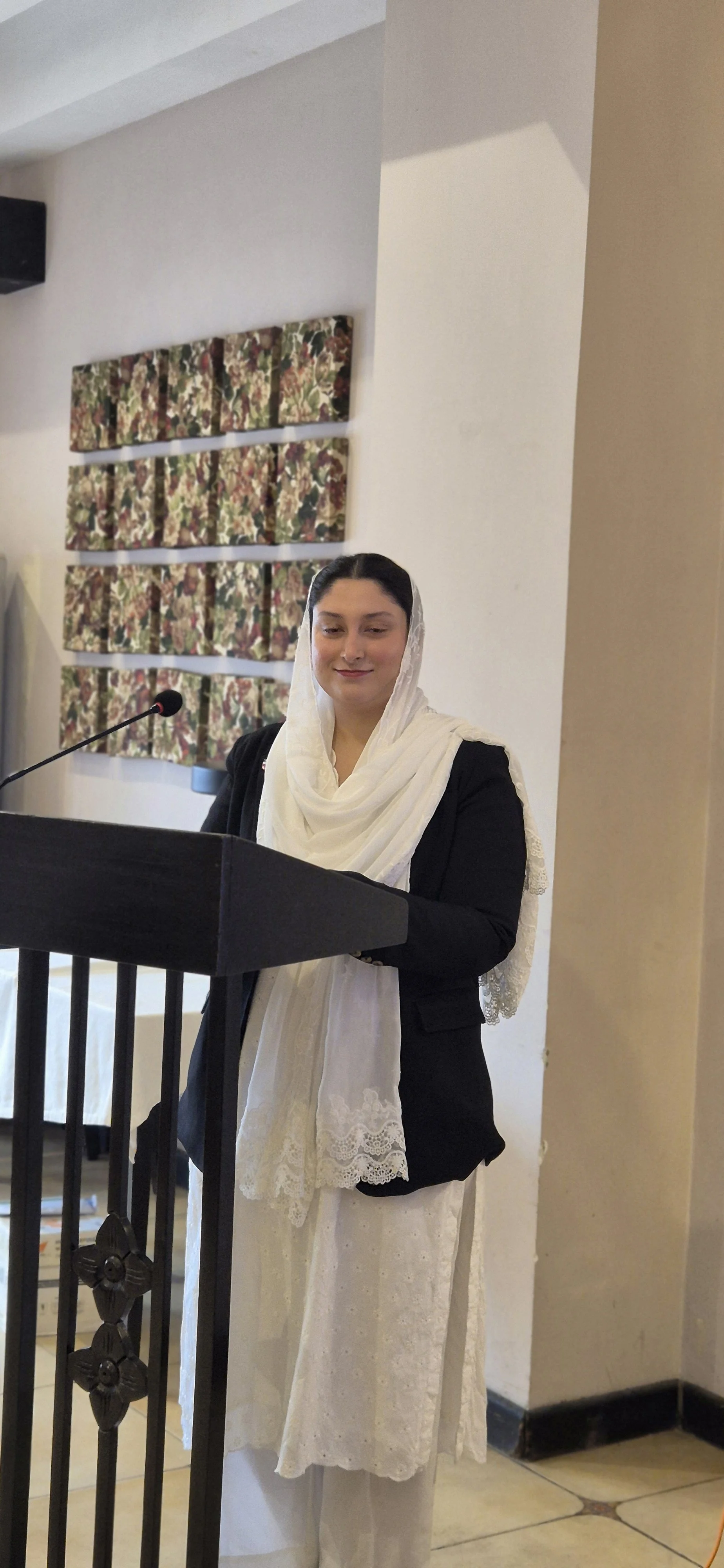
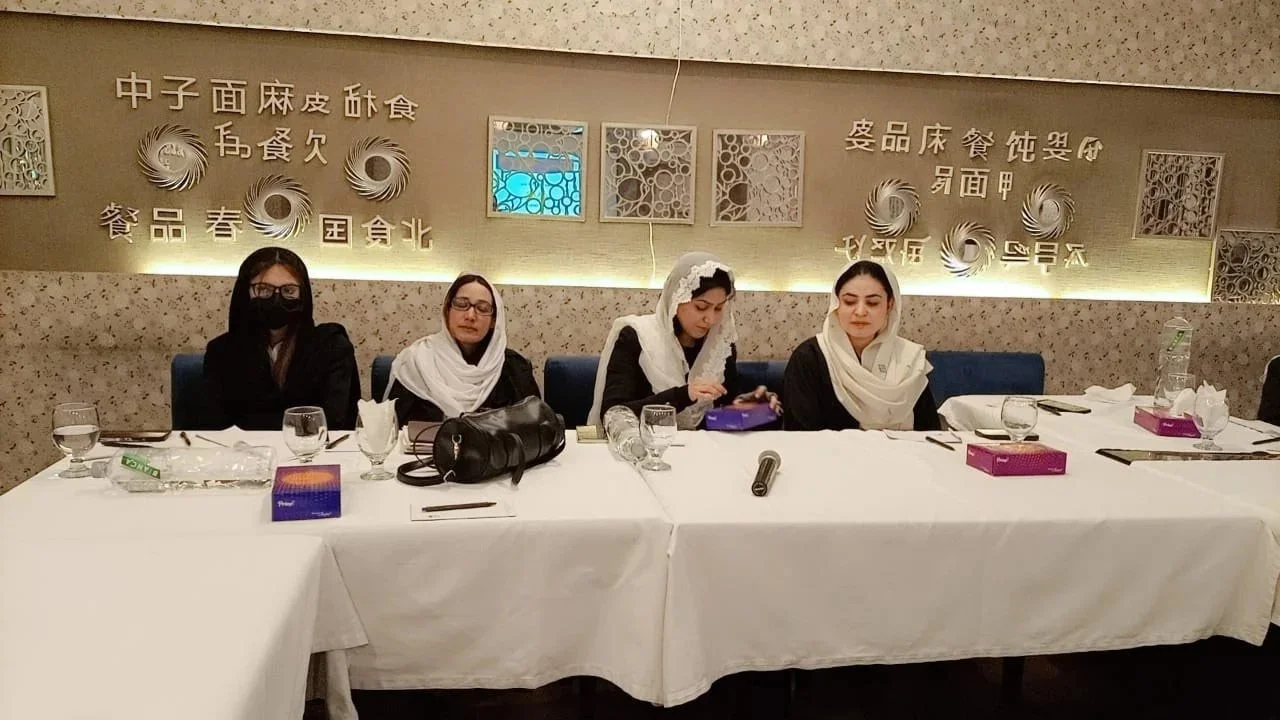
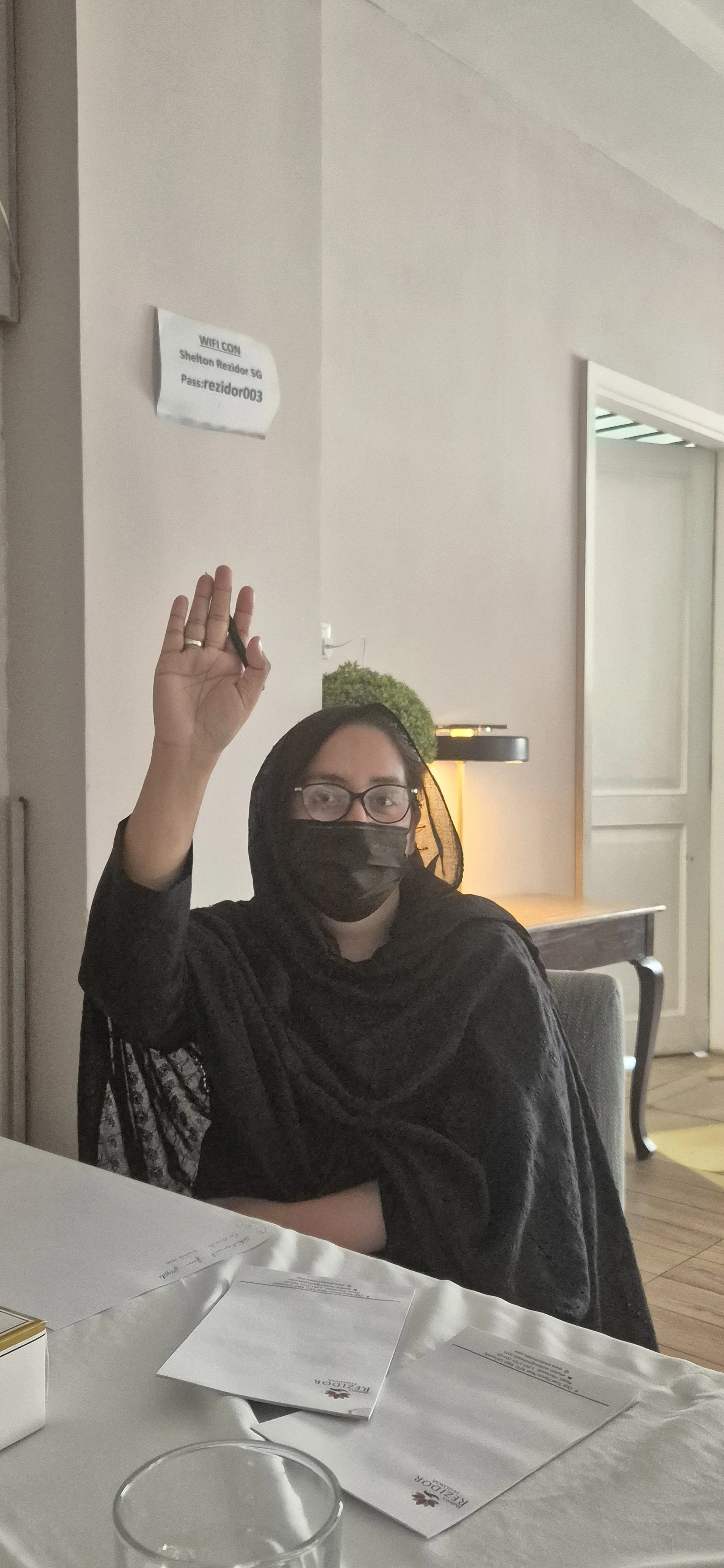
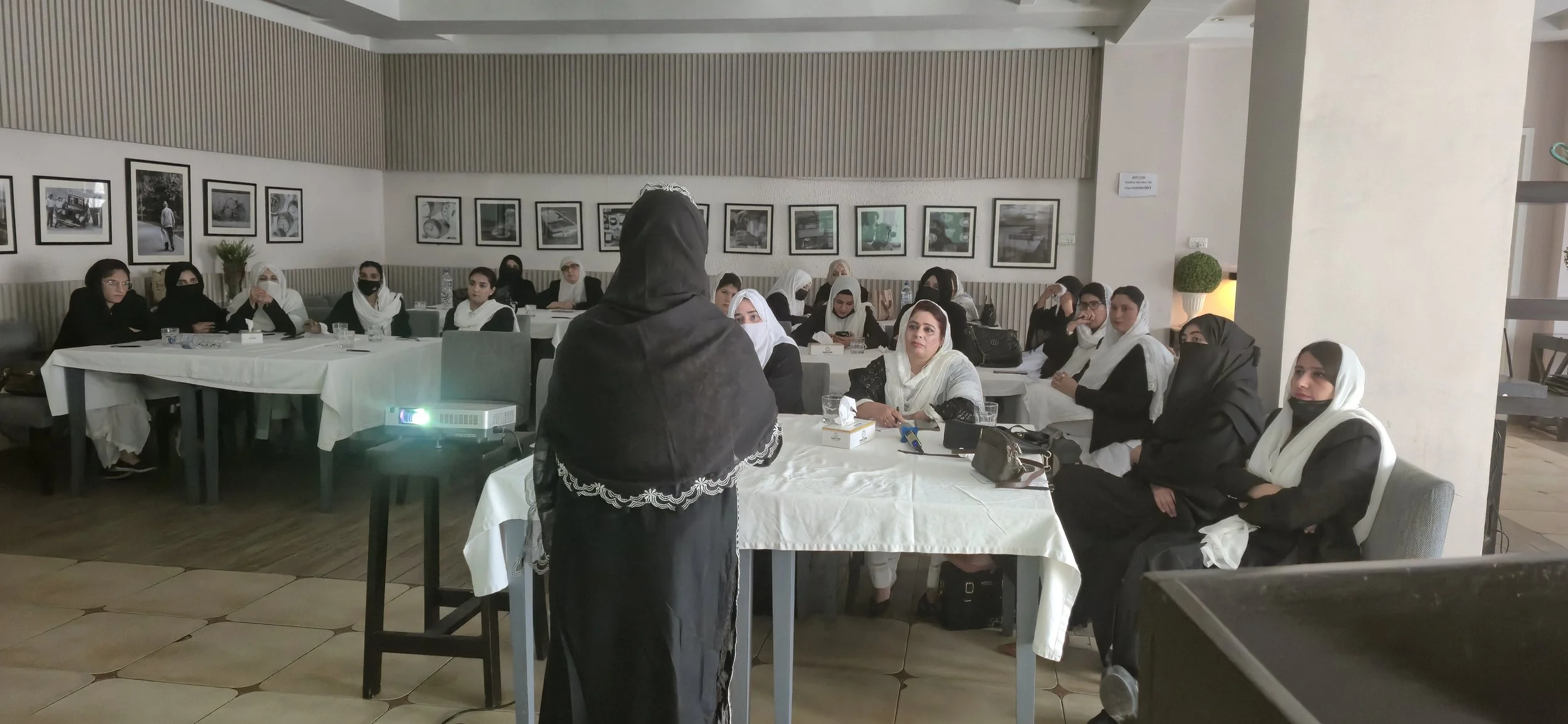
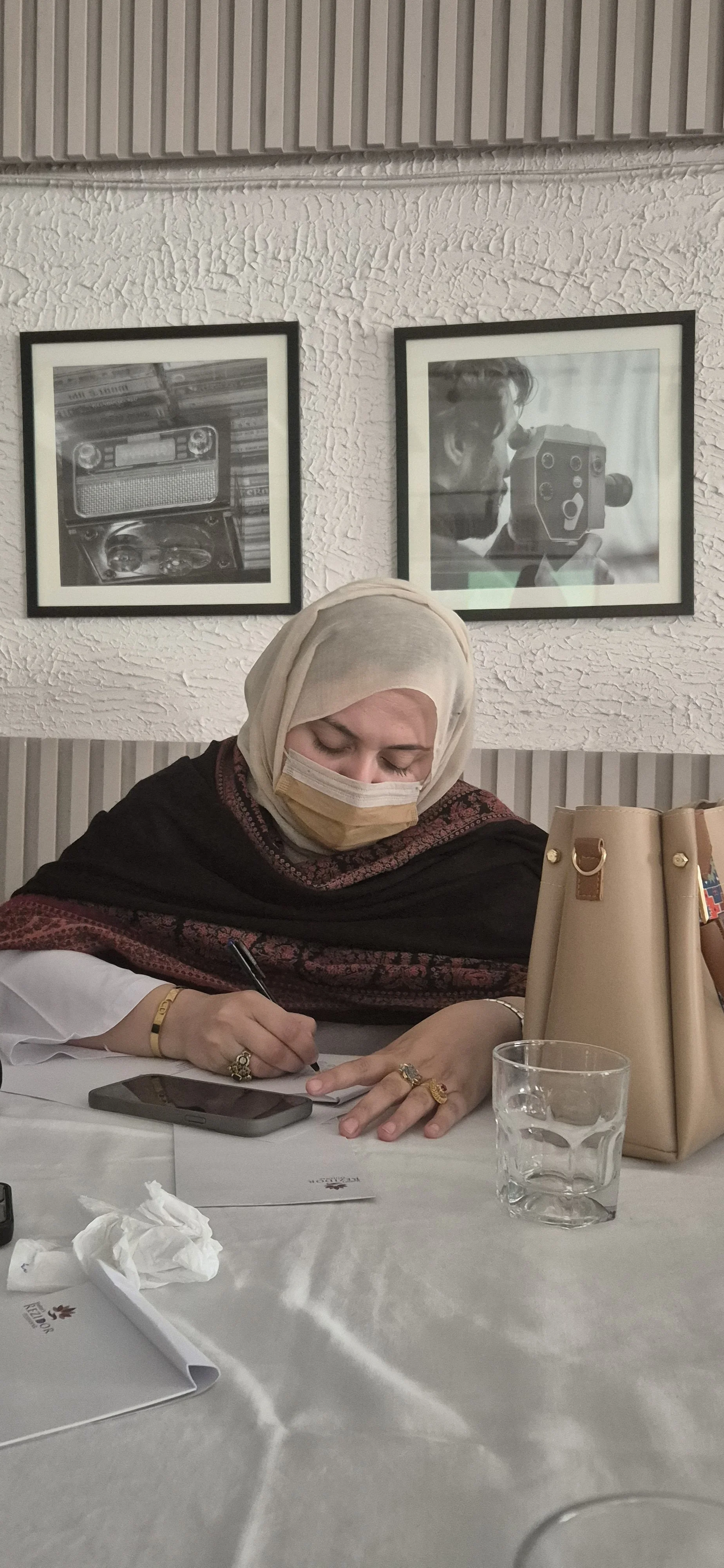
With our $500 Giving Joy microgrant, LaWomen delivered a capacity-building workshop for 20 female lawyers in Peshawar — the latest session in a training series LaWomen has run for women lawyers since early 2025, with each workshop building on the lessons of the last. This particular training had been planned but stalled due to lack of funding until the Giving Joy grant partially covered its cost. Two expert trainers were brought in: a senior lawyer and a communications specialist, delivering two carefully designed modules.
The first module focused on practical legal skills in the areas most critical to women's rights — family law, workplace harassment, and property and inheritance rights. The trainer walked participants through the latest developments and superior court judgments, using role-playing exercises to sharpen courtroom advocacy skills in real time. The second module took a different but equally essential approach: trauma-informed communication. Participants learned how to speak with clients who are survivors of human rights violations — how to listen without judgment, how to create safety in a conversation, and how to help a woman tell her story without fear.
The Impact
Twenty female lawyers left the workshop better equipped — not just legally, but humanly. The reviews were overwhelming, and one story in particular captured everything LaWomen is about.
A participant shared that she is the only female lawyer in her entire district in Khyber Pakhtunkhwa. An international organization had previously built her a dedicated room and washroom in the court premises so she could work safely. Recently, a group of male lawyers conspired to strip her of that space overnight — converting it into an e-library, removing her belongings, and barring her from entering. She reached out to LaWomen. Within days, the lawyers' network mobilized — raising the issue publicly, filing a protest with the Bar Council, and creating enough pressure that the room was restored and a formal apology was issued. That is what a network of trained, connected, supported women lawyers can do — for each other, and for the women they serve. For Zara personally, the workshop was another step toward the impact she has always dreamed of building. As a first-generation lawyer with no political connections or inherited wealth, every grant she receives goes directly back into the women around her. That is the model. That is the mission.
Lessons Learned
Because the grant only partially covered costs, LaWomen had to compress a wide range of material — family law, harassment, inheritance, trauma-informed practice — into a single intensive day. Participant feedback was clear: the material deserved more room. That feedback is now shaping LaWomen's next request — funding for a full 3–5 day program, with enough time for real discussion and hands-on practice rather than condensed coverage.
Looking Ahead
LaWomen's trained lawyers continue to defend women in courts across Khyber Pakhtunkhwa. Zara is now organizing a program focused on alternative dispute resolution and paralegal skills, building on the foundation this workshop laid. Beyond funding, Zara is also seeking mentorship — coaching from international trainers and legal experts who could help sharpen LaWomen's training methods and bring new global perspectives into the program. Participants asked for more time, more depth, more sessions — that request is itself a measure of impact.